

17 The Ramsbeck Metallurgical Plant
The foundation walls of the Ramsbeck lead smelter that we see in front of us give an impression of the approximate size of the facility at the foot of the Bastenberg, where the most important mining area of the lead and zinc mines was located until 1912. The lead was smelted in Ramsbeck, the zinc in Dortmund.
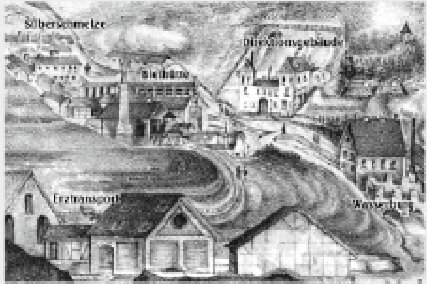
The smelter, built in 1853/54, was an extension of the plant already built by the entrepreneur Josef Cosack; it was supplemented by additional buildings. The smelting process was as follows:
- in the roasting furnaces the ore was separated from the sulphur it contained (100 quintals of ore per day and furnace).
- in the 13 blast furnaces, the roasted ore was turned into lead, which consisted of lead and silver (100 quintals of lead per furnace per day).
- in crystallisation boilers, the lead was separated into two alloys by special processes: a) the low-silver soft lead“, b) the high-silver „rich lead“.
- the rich lead was transformed into pure metallic silver by burning off the lead content in drifting hearths.
- in condensation channels the metallic substances, which had initially volatilised due to the high heat levels of the smelting processes, cooled and condensed. The necessary draught of air was created at the end of the channels through the chimney on the Bastenberg.
A smelter already existed in Ramsbeck when mining was carried out on behalf of the Cologne Electors. in the 19th century it was extended and modernised. In 1907, the smelter was closed down.